Everyone Knows What a Logo Is. Far Fewer Know What Brand Identity Means.
Walk into any conversation about design with a business owner and two things usually happen: they use the word logo, and they mean something much bigger. The confusion is understandable. A logo is the most visible part of a brand — the thing you put on a business card, your website header, and the front of your shop. But a logo is not your brand identity. It is a single component of it.
Understanding the difference is not just a semantic point. It has real consequences for how consistently, professionally, and effectively your business presents itself to the world.
What a Logo Actually Is
A logo is a mark — a symbol, wordmark, emblem, or combination — that identifies your business at a glance. It is the visual shorthand for everything your company stands for. But on its own, a logo cannot carry the entire weight of your brand communication. It needs a supporting system to give it context and consistency.
What Brand Identity Actually Is
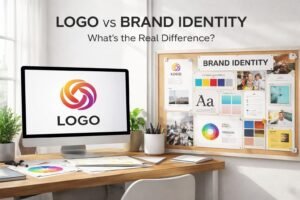
Brand identity is the complete visual and verbal language of your business. It includes your logo, yes — but also every other designed element that communicates who you are. A complete brand identity system typically includes:
- Primary and secondary logo variations for different use contexts
- A defined color palette with specific hex, CMYK, and Pantone values
- Typography guidelines — primary and secondary fonts, sizing, and hierarchy rules
- Iconography and graphic elements that support the visual system
- Photography and imagery style guidelines
- Brand voice and tone guidelines for written communication
- Application rules showing how the identity appears on various materials
Why the Distinction Matters for Your Business
A logo without a brand identity system is like a front door with no house behind it. Customers who interact with your business across multiple touchpoints — your website, your packaging, your social media, your business cards, your signage — should feel a consistent, coherent experience. That consistency is what builds recognition and trust over time.
When businesses launch with just a logo, they often end up making ad hoc design decisions that slowly erode brand consistency. Different fonts on different materials. Colors that are slightly off from one application to the next. Graphics that feel disconnected from the overall identity. The result is a brand that looks accidental rather than intentional.
When Should You Invest in a Full Brand Identity?
If you are launching a new business, the ideal time to establish your full brand identity is before you produce any customer-facing materials. Building the system from the start costs far less than trying to retrofit it later when you have already produced mismatched collateral.
If you are an existing business that has been operating with just a logo, the right time to build out your identity system is now — particularly if you are planning a growth phase, entering new markets, or finding that your current brand does not accurately reflect where your business is headed.
The Logo Wolf Approach to Brand Identity
At The Logo Wolf, we design logos as the starting point of a larger system, not the endpoint. Every logo project begins with understanding the business deeply enough to build an identity that stays coherent across every application — from a business card to a billboard, from a website favicon to a packaging label. That is the difference between a logo you can use and a brand identity you can grow.
Ready to elevate your brand?
Get in touch with The Logo Wolf today at thelogowolf.com and let’s build something unforgettable together.